Search for 'Coir Brushes'


5 mins
2024-12-13
0
0
Copy Link
Leisure travel has been around for ages. Wealthy people, scholars, and philosophers would often travel to faraway lands to experience new cultures and cuisines. Then, during medieval times, pilgrimage became a popular form of travel for the masses. However, leisure travel purely for pleasure, started gaining momentum in the United Kingdom during the Industrial Revolution. Cox & Kings was the first official travel company to be formed in 1758, targeting the new middle class of Britain which comprised of machine owners, traders and economic oligarchs. Fast forward to the 21st century and social media has completely transformed the way we travel. Families keep aside savings for travel, holidays are planned well in advance and Instagram influencers determine the new tourist hotspots.
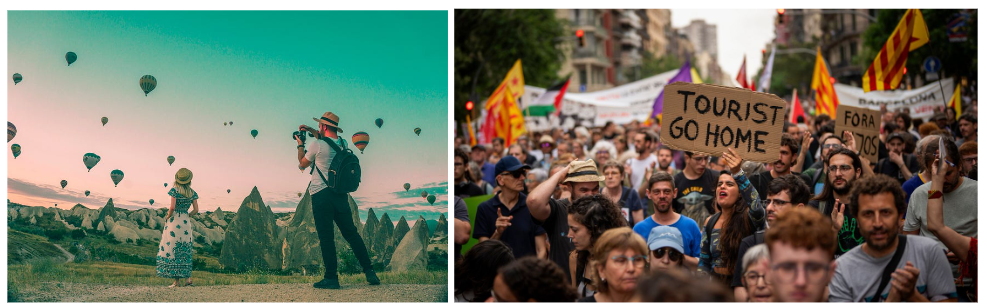
How Europe looks on Instagram (left) and how it looks in reality (right). Left photo: Source: Mesut Kaya on Unsplash . Right photo: Copyright AP Photo/Emilio Morenatti
If done right, travel has the potential to bridge gaps between societies, which can potentially improve international cooperation and reduce discrimination. Unfortunately, over-tourism has become a serious problem in many parts of the world. Europe has recently seen widespread protests against over-tourism in places like Barcelona, the Canary Islands, Venice and Amsterdam. As per this recent Harvard International Review article , “The overarching reasons behind the protests are similar across Europe: inaccessible housing, excessive pollution, scarce essential services and resources, and a general lack of adequate infrastructure.” Instead of renting homes to city residents, there is more money to be made if the same home is listed on Airbnb. A boom in short-term rentals leads to housing shortages for the residents, particularly in tourist hotspots. This drives up the cost of buying or renting a home. Adding more housing is one solution, but that comes at the expense of air pollution and air quality. Eating out becomes unaffordable for the locals as food prices go up during the peak tourist season. What may be the vacation of a lifetime for you, may be a nightmare for the residents of that town, city of village. So, for those who have been bitten by the travel bug but who also want to travel sustainably, here are six tips to keep in mind when planning your next vacation.
Remember that pizza place next door that looked so inviting when you moved into your home? Fast forward two years and you still haven't tried it out, right? Similarly, many of us tend to covet international holidays over local attractions. We want to see Bali and the Swiss Alps before we want to explore the Andaman Islands and the Himalayas. I recently travelled to the Western Ghats with my family and enjoyed spending time in nature and eating local food. There are many advantages to travelling locally:
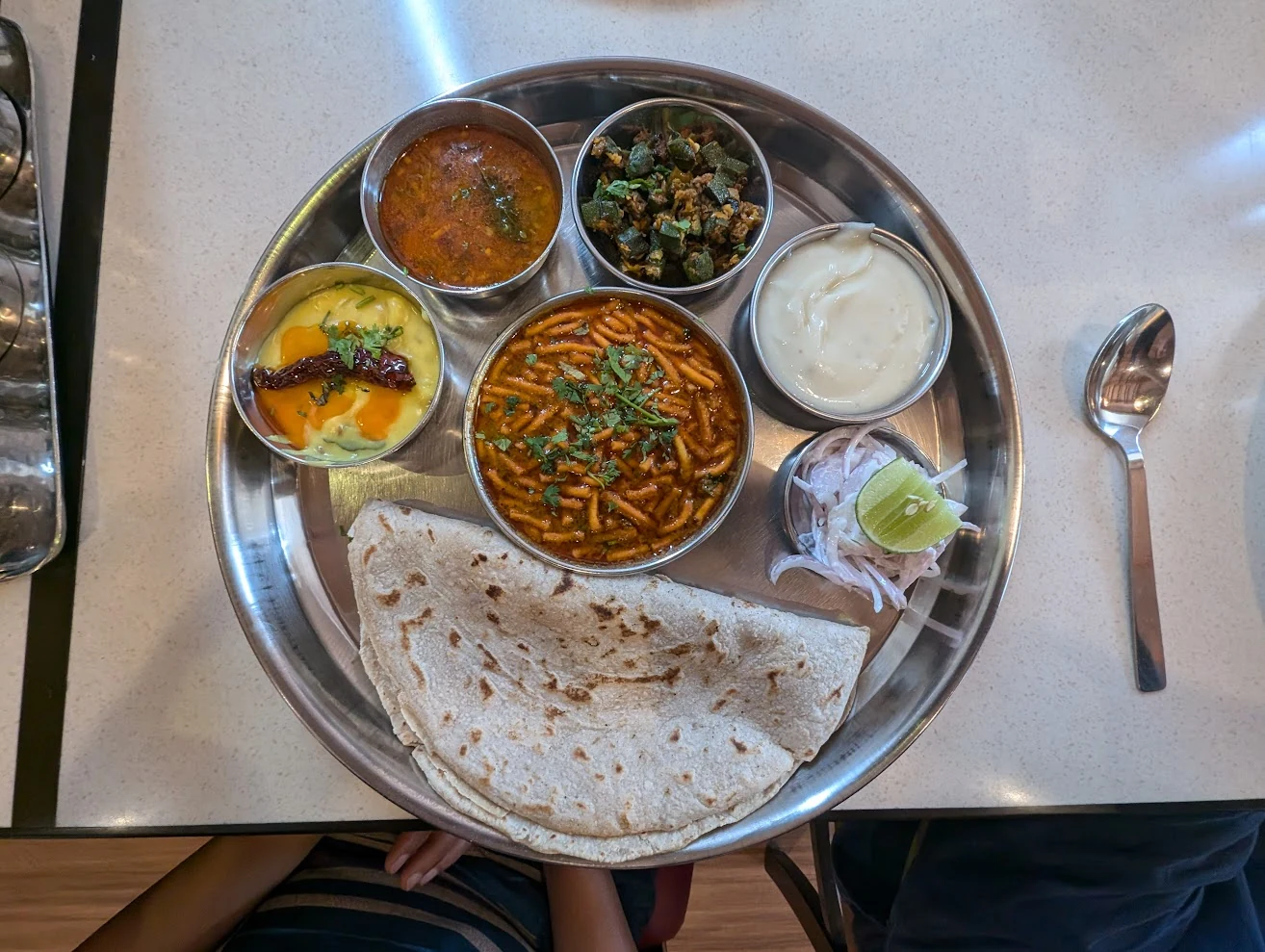
A Maharashtrian thali during my recent travels to Pune. Photo taken by author
Birds, the last surviving dinosaurs, have been around for 150 million years. In 2022, a bird called ‘bar-tailed godwit ’ took 11 days to fly 13,560 kilometres from Alaska to Australia without stopping for food or rest. This is the longest recorded ‘non-stop’ bird migration in history. Humans can not only travel further , they can do so ten times faster, while enjoying ridiculous comforts along the way. The aviation industry is the pinnacle of human ingenuity and progress. Unfortunately, like most other modern luxuries in the post-industrial era, air travel too has a hidden cost to society — an ecological and environmental cost that we often overlook when planning the next big vacation.
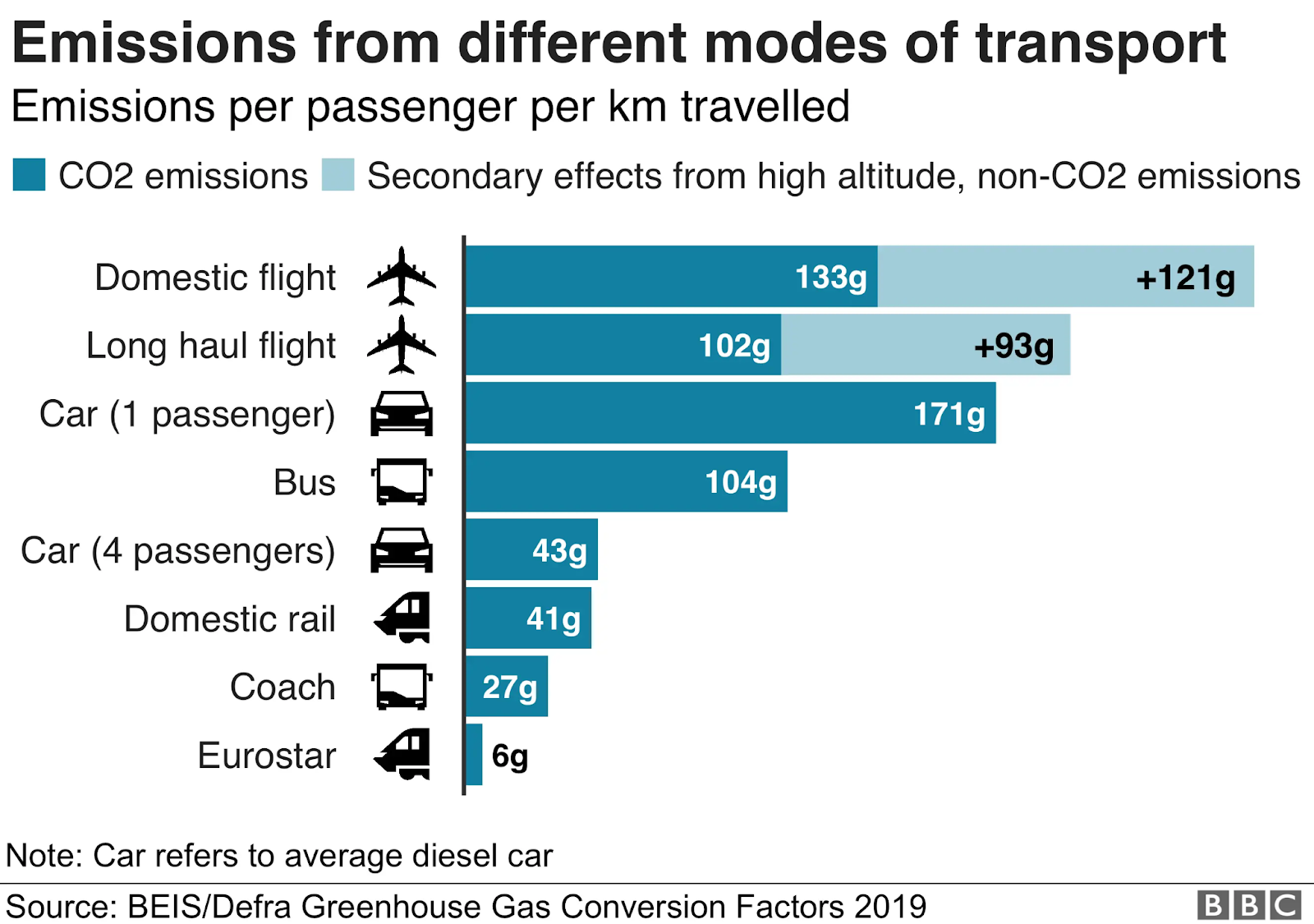
Air travel has the highest carbon footprint among all modes of transport. If you think about it, that’s not surprising — we are talking about lifting 300 people (& their luggage) 40,000ft above the ground and carrying them across continents at 1000km/hr. Here are some key takeaways:
-
Domestic air travel is worse than long-distance air travel because taking-off and landing accounts for a big portion of any flight’s emissions.
-
Flying results in 5-10x higher carbon emissions per passenger than travelling by Volvo bus or train.
-
Emissions from driving alone are almost as bad as flying. But if you travel with family or friends, CO2 emissions per passenger reduces drastically (43g per passenger per km compared to 171g when driving alone).
While travelling, the biggest source of plastic pollution is from consuming bottled water. You will be offered bottled water on planes, on trains, in your hotel room, at most restaurants and shopping centres. Most often, the water is complimentary, which makes it hard to resist! What you may not have noticed is that there are RO water filters everywhere too, at the railway platform, at airports, in the hotel lobby and shopping malls. All you need to do is carry your own water bottle.
During a recent trip with my family, we said no to at least 15 water bottles across two train journeys, three different hotel stays and a visit to two theme parks. That’s 15 water bottles that are NOT going to end up in our rivers and oceans. We carried two water bottles, one for adults and one for our daughter and filled them at every RO station we came across. Simple. Plastic eliminated.
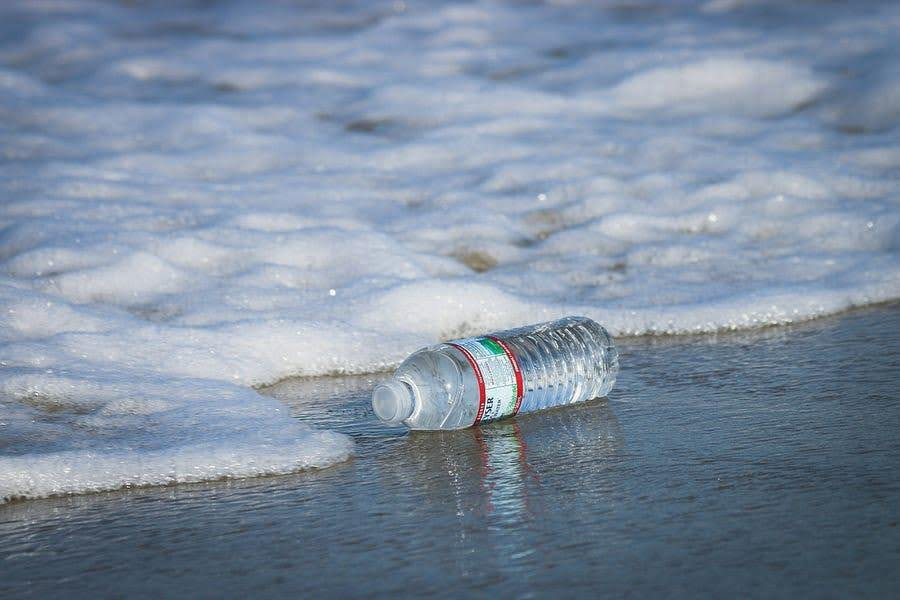
Photo by Brian Yurasits on Unsplash
Hallstatt, a small picturesque town in Austria has a population of 800. During peak season, it can receive up to 10,000 tourists per day. Imagine the amount of trash and waste that is generated due to this influx of tourists. How can the local government possibly manage the mounting garbage? The tourists come for selfies by the lake but leave behind empty plastic bottles, leftover food at restaurants and Nutri-bar wrappers. It is not fair to burden cities with this problem. We visit these places because of their beauty, so, it is only fair that we try our best to maintain that beauty by reducing and managing our trash. Here’s what you can do:
-
Carry your water bottle.
-
Take the food wrappers back with you in your backpack/luggage; dispose of them in a bigger city or near your home.
-
Order less food to avoid leftovers; it’s much harder to manage leftovers on holidays.
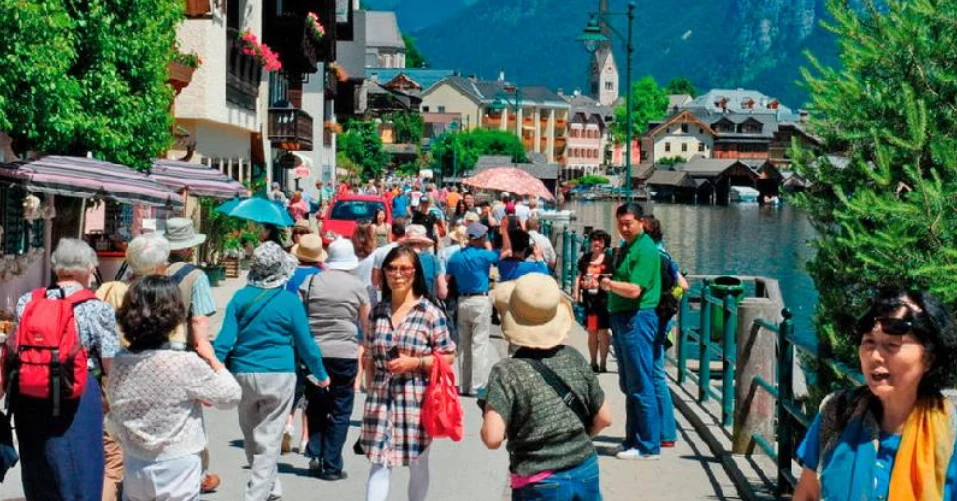
Hallstatt has seen various protests due to over-tourism. Photo source here .
Once you have addressed the transportation emissions and plastic pollution, you can go the extra distance by refusing complimentary services at your hotel. Do you wash your bedsheets and towels every day? Probably not. Then why do we expect hotels to wash our linens and towels daily? Thankfully, most hotels have now adopted an ‘opt-in’ model for room service, wherein room service is only provided upon customer’s request. Unless you are hiking in the forests and/or rolling around in mud, chances are you don't need to clean your towels during a short stay at a hotel.
When I was younger, I used to feel embarrassed when my parents would take any leftover toiletries after a hotel stay. However, over the years I came to realise that most hotels throw away unused shampoo & conditioner bottles after check-out. So, it is perhaps better to take that half-opened bottle of conditioner and finish it at home. If you have room to keep a shampoo or soap bar in your luggage, you may be able to eliminate the need to open these plastic bottles at the hotel.

Photo by Lisha Riabinina on Unsplash
Travelling is awesome. It breaks the daily monotony, it opens us up to new cultures and most importantly, new food. It is a great way for kids to know more about the real world (instead of learning about it via TikTok). Sadly, when we travel, we are often in the mood to get pampered. Thinking about sustainability is not at the top of our list. However, don't forget that Bali, Goa or Shimla may be holiday destinations for you, but for countless animals, plants and humans, these places are home. Treat their home the way you would want them to treat yours. If you are booking your holiday with a travel agency, there are new ones that are focused on minimising your environmental impact, like Ecosphere. Resorts like The Machaan in Lonavala are all-in on sustainability; they produce most of their electricity using on-side windmills and solar panels. So, where is your next vacation? What changes will you make on your next holiday? Let us know in the comments section. Thanks for reading.
7 mins • 2026-06-02

5 mins • 2026-05-20

6 mins • 2026-04-18

6 mins • 2026-03-31

5 mins • 2026-01-23

5 mins • 2026-01-21
0
0
Copy Link
to write a comment.